Business
It’s the strangest job market the U.S. has ever seen. The low-hire, low-fire economy turns 3 years old.
By Marcus Chen
Advertisement · Why this ad?
Marcus manages the day-to-day editorial workflow across all brands, coordinating coverage assignments and ensuring editorial standards are met. He previously served as city editor at the Pioneer Press and holds a degree in Political Science from Carleton College.
More from Marcus →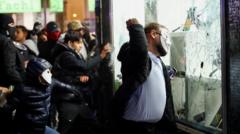
In the heart of Frankfurt, chaos erupted as protesters took to the streets, demanding relief from rising living costs. Shattered glass and overturned bins marked a stark contrast to the peaceful demonstrations that had characterized earlier gatherings. The unrest, which began as a call for economic justice, quickly escalated into violent riots, leaving local businesses reeling from looting and destruction.
On a recent Saturday, police reported violent riots in Frankfurt's city center, with similar disturbances occurring in Berlin, Hamburg, and Cologne. The protests were sparked by soaring inflation and the increasing cost of essential goods, which have left many Germans struggling to make ends meet. Activists rallied under the banner of economic justice, but the situation devolved into chaos as tensions boiled over.
According to local authorities, over 100 individuals were arrested as clashes with law enforcement intensified. The police responded with tear gas and water cannons to disperse the crowds, but protesters continued to confront officers. The unrest has raised concerns about public safety and the ability of local governments to maintain order.
The impact of these riots extends beyond the immediate destruction. Local businesses, already struggling due to pandemic-related restrictions, now face the additional burden of repairing damage from looters. Many shop owners in Frankfurt reported losses in the thousands, with some forced to close temporarily as they assess the extent of the damage.
“It's disheartening,” said Klaus Müller, a shop owner whose storefront was vandalized. “We were just starting to recover, and now this. We need support, not more chaos.” The sentiment is echoed across affected cities, where communities are grappling with the fallout from the violence.
In Berlin, the owner of a small café, Maria Weber, expressed her frustration: “We were just beginning to see customers return after lockdowns, but now this violence has scared them away again. I worry if we can survive another setback like this.” The fear of losing their livelihoods hangs heavy in the air as small business owners contemplate their futures amidst ongoing economic uncertainty.
In Cologne, local markets faced similar fates, with vendors reporting significant losses. Many community members are rallying around these businesses, organizing fundraisers to help them recover. “We are all in this together,” said local activist Thomas Becker. “We need to support our neighbors, not just during good times but especially when they are struggling.”
While the violence has overshadowed the initial message of the protests, many participants insist their grievances are legitimate. “We are tired of empty promises from the government,” stated Anna Schmidt, a protester from Berlin. “People are struggling to pay their bills, and we need action, not just words.” This sentiment resonates with many who feel left behind by economic policies that seem to favor large corporations over ordinary citizens.
As the protests spread, they have sparked a debate about the effectiveness of government measures to combat rising costs. Critics argue that more must be done to address the root causes of inflation and provide relief to those most affected. “The government has been too slow to react,” said activist and economist Dr. Felix Braun. “We need immediate action to address these economic disparities, not just band-aid solutions.”
Many protesters have also voiced concerns about the rising energy prices, which have disproportionately affected low-income households. “Every month, I feel like I’m making a choice between heating my home or buying groceries,” lamented protester Lisa Fischer. “It’s a choice no one should have to make.” These personal stories reflect a broader struggle that is resonating throughout Germany.
In response to the escalating violence, government officials have condemned the riots but also acknowledged the underlying issues driving the protests. Chancellor Olaf Scholz stated, “While we respect the right to protest, violence is never the answer. We must listen to the concerns of our citizens and work towards solutions.”
The government is now under pressure to implement measures that address the cost of living crisis. Proposals include increasing social benefits and capping energy prices to alleviate the financial strain on families. However, the effectiveness of these measures remains to be seen, as public frustration continues to mount.
Local leaders are urging the government to act swiftly. Frankfurt’s mayor, Peter Feldmann, expressed concern over the potential for further unrest if citizens feel their needs are ignored. “We must engage with our communities and ensure that their voices are heard,” he said. “Failure to do so could lead to more protests and potentially more violence.”
The recent riots in Germany are not isolated incidents but part of a larger trend of civil unrest seen across Europe. Rising costs of living have sparked similar protests in countries like France and the United Kingdom, where citizens are frustrated with government inaction on economic issues. This broader context highlights a growing discontent among the populace, particularly as the pandemic recovery has not been equitable for all.
In Germany, the economic landscape has been further complicated by global supply chain disruptions and the war in Ukraine, which have driven energy prices to unprecedented levels. Many citizens feel the burden of these challenges acutely, as they struggle to maintain their standard of living amid rising costs.
The aftermath of the riots has left many questioning the future of protests in Germany. Will the violence deter people from speaking out, or will it galvanize further action? As communities begin to rebuild, the need for dialogue between the government and citizens has never been more critical.
Local leaders are calling for a comprehensive approach to address the economic challenges facing families. “We need to come together to find solutions that work for everyone,” said Feldmann. “Violence is not the answer, but we must not ignore the underlying issues that led to this unrest.”
As tensions remain high, the path forward will require commitment from both the government and citizens to forge a more stable and equitable future. Community forums are being organized across the affected cities to discuss the way forward, with hopes that constructive dialogue can replace the anger and frustration that fueled the recent riots.
In the coming weeks, activists plan to continue their protests, but with a renewed focus on peaceful demonstrations that emphasize their calls for economic reform. “We want to be heard, but we also want to be safe,” said Schmidt. “Our message is clear: we need change, but we must advocate for it peacefully.”
The future of these protests will likely depend on the government’s response to the underlying issues driving the unrest. With public pressure mounting, officials may be compelled to act quickly to implement reforms that address the cost of living crisis. The ongoing discussions in community forums will play a vital role in shaping the narrative around these protests, ensuring that they remain focused on constructive solutions rather than descending into further violence.
Moreover, the role of local organizations and community leaders will be crucial in fostering a sense of solidarity among residents. Initiatives aimed at supporting local businesses and providing resources for those affected by the riots will be essential in rebuilding trust within the community. As residents come together to support one another, there is hope that a renewed sense of unity can emerge from the ashes of the recent chaos.
In conclusion, while the violence of the recent protests has cast a shadow over the legitimate grievances of many, it also presents an opportunity for change. By addressing the root causes of economic distress and fostering open dialogue, Germany can work towards a more equitable future for all its citizens.
By Marcus Chen

By Marcus Chen

By Katherine Langford

By Marcus Chen