Business
Shops looted as German cost of living protests turn violent
By Marcus Chen
Advertisement · Why this ad?
Marcus manages the day-to-day editorial workflow across all brands, coordinating coverage assignments and ensuring editorial standards are met. He previously served as city editor at the Pioneer Press and holds a degree in Political Science from Carleton College.
More from Marcus →
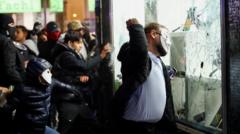
Amid the echoes of sirens and the rattle of shattered glass, a group of young protesters in Berlin faced off against police on a chilly evening last week. The tension was palpable as the demonstrators, fueled by frustrations over social issues, began to escalate their actions, resulting in violent clashes and looting in various parts of the city. This unrest in Germany has drawn comparisons to the recent riots in France, highlighting a growing wave of discontent among the youth across Europe.
In Berlin, protests erupted last Thursday as thousands of young people took to the streets, demanding action on pressing social issues such as climate change, economic inequality, and police violence. The peaceful demonstration quickly turned chaotic when some protesters began to clash with law enforcement. Reports indicated that officers were deployed to manage the crowd, but tensions escalated, leading to violent confrontations.
Meanwhile, in Frankfurt, the situation deteriorated further as shops were looted and property was damaged. Eyewitness accounts described scenes of chaos, with young people smashing windows and stealing merchandise. The violence in both cities has raised alarms among city officials and law enforcement, who are now grappling with the implications of this unrest.
The protests in Germany are part of a broader trend among Generation Z, who are increasingly vocal about their dissatisfaction with societal conditions. Many young people feel disenfranchised and believe that their concerns are not being adequately addressed by the government. This sentiment has been exacerbated by economic challenges, including rising living costs and job insecurity, which have left many feeling hopeless.
The unrest in Germany comes on the heels of similar riots in France, where young demonstrators clashed with police over issues ranging from police brutality to economic disparity. The parallels between the two countries suggest a wider European phenomenon, where youth are mobilizing in response to systemic issues that they see as unjust.
Among the protesters in Berlin was 19-year-old Lena, who expressed her frustration with the government’s inaction on climate change. "We are the future, and if we don’t act now, there won’t be a future for us to fight for," she stated passionately. Many young people like Lena feel that traditional political channels have failed them, leading to a sense of urgency that drives them to the streets.
In Frankfurt, a local shop owner named Herr Müller, who has run his family’s bakery for over 30 years, lamented the destruction of his storefront. "I understand the anger, but this isn’t the way to make a point. We are all suffering, and now my business is in jeopardy because of this chaos," he said, highlighting the complex emotions felt by both protesters and community members.
The violence and destruction have not only affected the immediate areas where protests occurred but have also instilled fear in local communities. Business owners in Frankfurt expressed their dismay at the damage inflicted on their shops, many of which are family-owned and have been part of the community for generations. The looting has left a lasting impact, as these businesses now face the daunting task of recovery.
Local residents have also voiced their concerns, noting that while they understand the frustrations driving the protests, they do not condone the violence. Many community leaders are calling for dialogue and constructive engagement to address the underlying issues instead of resorting to chaos.
In the aftermath of the protests, several community organizations in both Berlin and Frankfurt have begun to mobilize resources to support affected businesses and promote dialogue. Initiatives such as community forums and workshops are being organized to foster understanding between youth and local leaders. These efforts aim to create a platform where grievances can be aired constructively, allowing for potential solutions to emerge.
Additionally, local NGOs are stepping up to provide mental health support for young people who may be struggling with feelings of anger and hopelessness. As the community grapples with the aftermath of the unrest, these initiatives are crucial in rebuilding trust and fostering a sense of unity.
In response to the unrest, government officials have condemned the violence and called for calm. Berlin's mayor emphasized the need for dialogue and understanding, stating that while protests are a vital part of democracy, violence is never the answer. The government has pledged to investigate the incidents and hold those responsible accountable.
Law enforcement agencies are also reviewing their strategies for managing protests, aiming to strike a balance between maintaining order and respecting the right to peaceful assembly. This incident may lead to changes in how police engage with demonstrators in the future, especially given the heightened tensions surrounding social issues.
As discussions about police reform and social justice gain momentum, the recent protests may serve as a catalyst for policy changes in Germany. Advocacy groups are urging the government to consider reforms that address not only police practices but also broader social inequalities that fuel discontent among the youth. The potential for legislative change could hinge on the government’s willingness to engage with the concerns raised during these protests.
The events of last week have sparked a national conversation about the state of youth activism in Germany and the broader implications for society. As young people continue to express their frustrations, it is crucial for leaders to listen and engage with their concerns. Failure to address these issues may lead to further unrest and division within communities.
Moving forward, it will be essential for both government and community leaders to foster an environment where young people feel heard and valued. Initiatives aimed at addressing economic disparities, climate change, and social justice could pave the way for constructive dialogue and prevent future violence.
As Germany navigates this turbulent period, the hope is that a commitment to understanding and addressing the root causes of discontent will emerge, leading to a more cohesive society where all voices are valued. The path forward will require collaboration, empathy, and a willingness to confront uncomfortable truths about societal inequalities.
By Marcus Chen

By Katherine Langford

By Marcus Chen

By Marcus Chen